

+70
°
F
+74°
+58°
Niagara Falls
Thursday, 16
See 7-Day Forecast
Featured News - Current News - Archived News - News Categories
National Grid press release
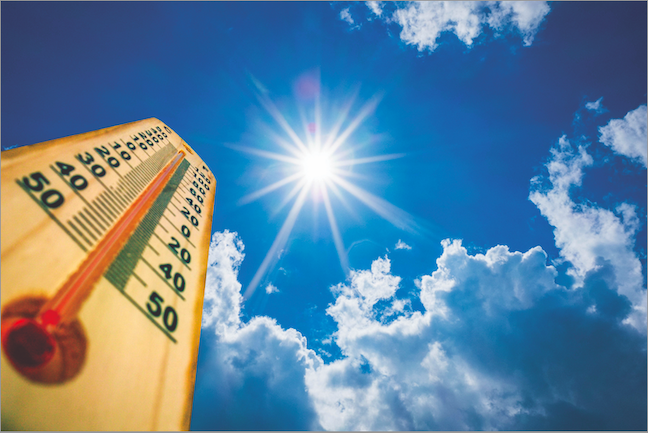
Beating the heat in upstate New York can be as simple as lowering your thermostat and closing your blinds. With high temperatures and humidity on the horizon, National Grid wants our customers to reduce their energy usage and bills by incorporating some easy no- and low-cost energy solutions into their lives.
It’s tough to escape summer’s grip, but there are simply ways to reduce how it impacts your energy bill. According to the U.S. Department of Energy, about three-quarters of sunlight shining on a double-paned window enters the home as heat. Closing your window coverings can keep rooms cool and delay your air conditioning from running as frequently. Air conditioning accounts for 12% of a home’s electricity use during the summer as we look for ways to stay healthy and comfortable on the hottest days.
Summer cooling assistance programs for income-qualified customers provide additional assistance and support during the warm weather months.
Simple steps to prepare your home
Before the season’s first heat wave strikes, there are simple energy-efficiency steps you can employ to be prepared and stem your energy usage.
National Grid recommends the following actions to make your home more energy efficient:
•Replace your air filter. Dirty air filters on central and room air conditioning systems can choke off the flow of air to your home’s ventilation system. Changing or cleaning your filter, as directed by the manufacturer, permits air to flow freely and your system to run more efficiently.
•Vacuum your air intake vents and keep them clear. Dust builds up on your home’s air returns. A couple of minutes with a vacuum can keep the air flow moving. Move toys, furniture and other objects away from the intake vent to keep air moving.
•Check the seal on your window air conditioner. Moisture can damage the air conditioner seal, allowing cool air to escape and warm air to enter. Inspect and replace damage seals to keep your unit working at peak efficiency.
•Consider rearranging furniture near your thermostat or room air conditioner. Lamps and televisions radiate heat, and if they are too close to the thermostat, your air conditioning could run longer than necessary to cool a room.
•Replace incandescent light bulbs with LED bulbs. Incandescent light bulbs use more energy and emit more heat than an LED bulb. According to the U.S. Department of Energy, LED bulbs use at least 75% less energy and last up to 25 times longer than incandescent lighting.
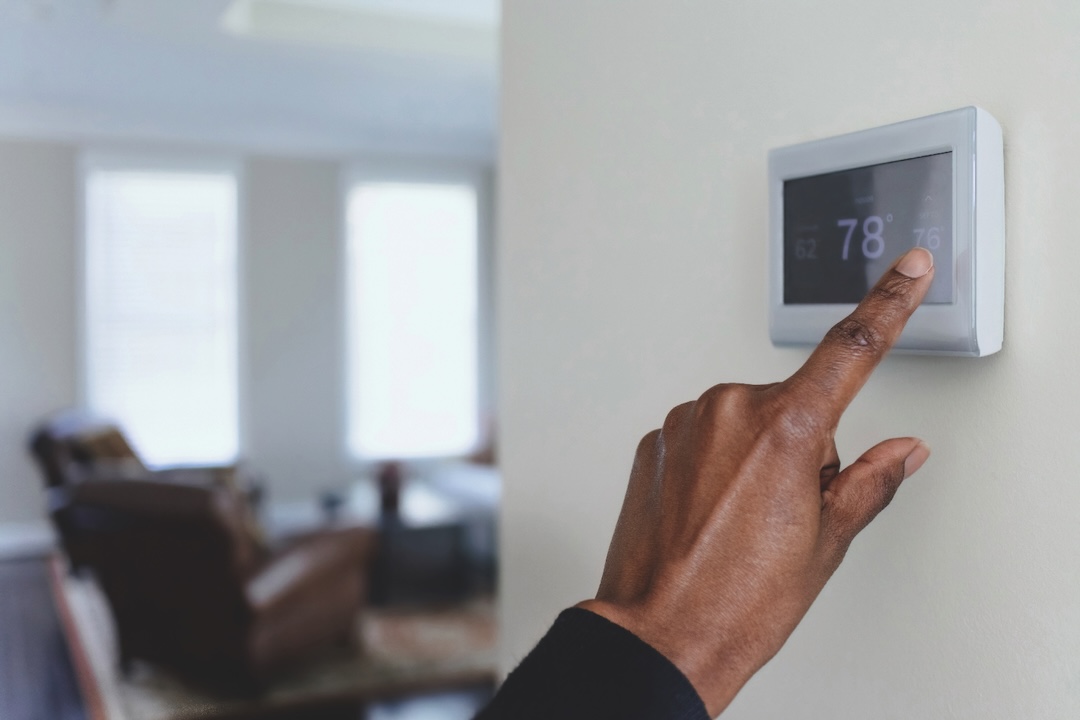
•Consider installing a programmable or smart thermostat. Programmable thermostats allow you to run your air conditioning on a schedule, while smart thermostats offer the ability to control your home’s temperature from your mobile device or computer, and learn your usage trends. These thermostats can save as much as 10% on your annual electric cooling bills.
•Prep your home when you go on vacation. If there’s a road trip or beach vacation on your calendar, take a couple of extra steps such as turning up your thermostat to keep your air conditioning from running while no one is home. Unplugging electronics with remote control or “instant on” features can save about $4 a month.
When the heat arrives
•Set your thermostat’s temperature and keep it there. The lower your air conditioning temperature, the more costly it is to operate. Setting the temperature a couple of degrees higher can save money without compromising your safety or comfort. According to Cornell Cooperative Extension, you can save 3%-5% on your summertime energy bill for every degree you raise the temperature. For example, a 75-degree setting costs between 9%-15% more than a 78-degree setting.
•Run fans with your air conditioning. Running a ceiling fan along with your air conditioning allows you to raise your thermostat by about 4 degrees without impacting your comfort level. Using oscillating or box fans near your air conditioning vents creates an air flow like winter windchills, as cold air circulates throughout the room.
•Turn off lights when you’re not using them. This can help save money by reducing your electricity bills, extend the life of your light bulbs, and result in buying bulbs less often.
•Keep your interior doors open. Everyone needs privacy but keeping interior doors open promotes airflow between rooms and balances the temperature throughout your home.
•Close your window coverings. Ambient sunlight can heat a room, and drawing your curtains and blinds can reduce the sun’s heating of your home and keep your air conditioning from running more than necessary.
•Think twice before starting your oven. Conventional and convection ovens can add unnecessary heat to your home and force your air conditioner to run unnecessarily. Keep the heat outside by using a grill or, if that’s not an option, consider using a microwave or slow cooker to do the job.
•Delay large appliance use. Avoid running your dishwashers and laundry appliances in the afternoon or evening, when energy use is highest. Try to run them during the morning or, if you have a delay setting, run them overnight.
Stay safe when working outside
Avoid working outside during extremely hot weather. Prolonged exposure to temperatures of 90° F, accompanied by high humidity, can cause the body’s temperature to rise and place a strain on the heart and blood vessels – the most important parts of the body’s natural cooling system. On hot, humid days, avoid prolonged, strenuous outdoor activity such as gardening, lawn mowing, exercise or recreational activity.
National Grid offers these tips and more to keep you safe if you're working outdoors:
•Drink liquids. Don’t wait until you are thirsty. Avoid alcohol and drinks that contain caffeine and salt. If you have a medical problem with body water balance, check with your doctor.
•Take frequent breaks in the shade or air-conditioned spaces to cool your body.
•Know the signs of heat-related illnesses.
•If you are working outside and digging into the ground, call 811 at least 48 hours before beginning your job to have underground utilities marked. Not only will this keep you safe, it's the law!
National Grid is ‘Here For You’
National Grid reaches out to customers all year long to provide assistance and information that can help you afford your energy usage. Our “Here For You” website outlines ways to save money on your bill, and programs to manage and afford your energy use.
Customers who meet HEAP income requirements or receive benefits from a qualifying government assistance program also qualify for our Energy Affordability Program, which provides a monthly bill credit. Learn more about EAP by visiting our website, emailing [email protected] or calling 866-305-1915.




























1859 Whitehaven Road, Grand Island, NY 14072
Phone: 716-773-7676
Fax: 716-773-7190